


KPop Demon Hunters has caught the attention of the medical field, with the American Psychiatric Association offering a deep analysis of its themes.
On September 5, Yale University professor Na Jong Ho (Department of Psychiatry, School of Medicine) revealed on social media that Psychiatric News, the official newspaper of the American Psychiatric Association, published an article analyzing the Netflix animation.
He shared a screenshot of the piece, adding, “This is the Psychiatric News analysis of ‘KDH’. If I had been a little less busy this summer, I would have contributed as well. A bit of a shame.”
The article explored the show’s emotional depth, saying, “The setting of Korea adds deeper meaning. In many Asian cultures, mental illness is still seen as a moral issue, or as a failure of the individual or their family. Asian Americans also have very low rates of using mental health services."
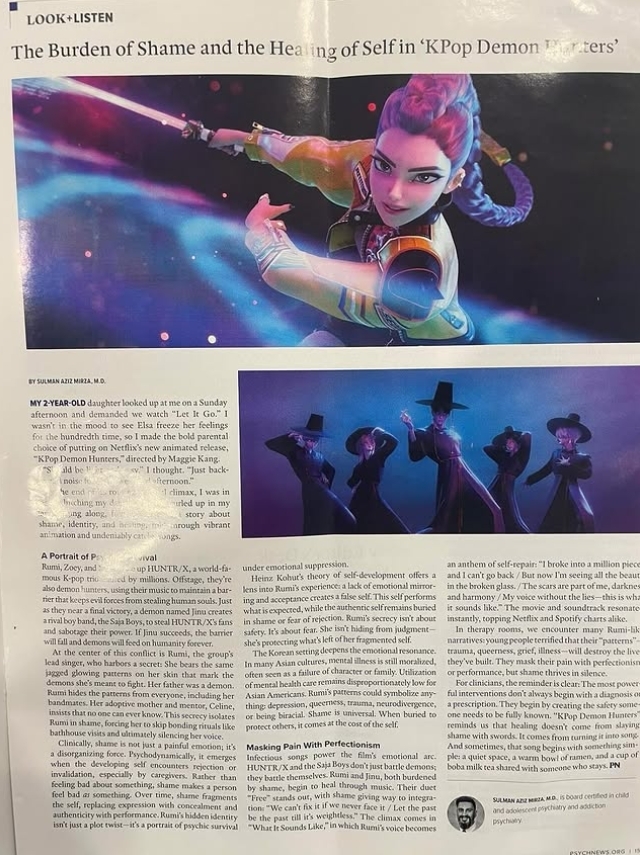
The writer added, "Rumi’s symbol could represent depression, LGBTQ identity, trauma, neurodiversity, or multiracial identity. Shame is universal. When people bury their shame to protect others, they end up paying the price themselves.”
The writer continued, “In clinical practice, we often see many ‘Rumis.’ Young people afraid of their ‘symbols’—whether trauma, sexual identity, grief, or illness—may destroy the lives they built. They hide pain behind perfectionism or achievement, but silence only makes shame grow."
The writer added, "The most powerful intervention isn’t diagnosis or prescription, but creating a safe space where someone feels truly understood. Healing doesn’t come from cutting shame away—it begins when shame is turned into song.”
Meanwhile, KPop Demon Hunters tells the story of Rumi, Mira, and Zoey, K-pop idols who secretly protect the world as hidden heroes behind their glamorous stage lives. Since its release on June 20, the action-fantasy series has gained huge popularity around the globe.