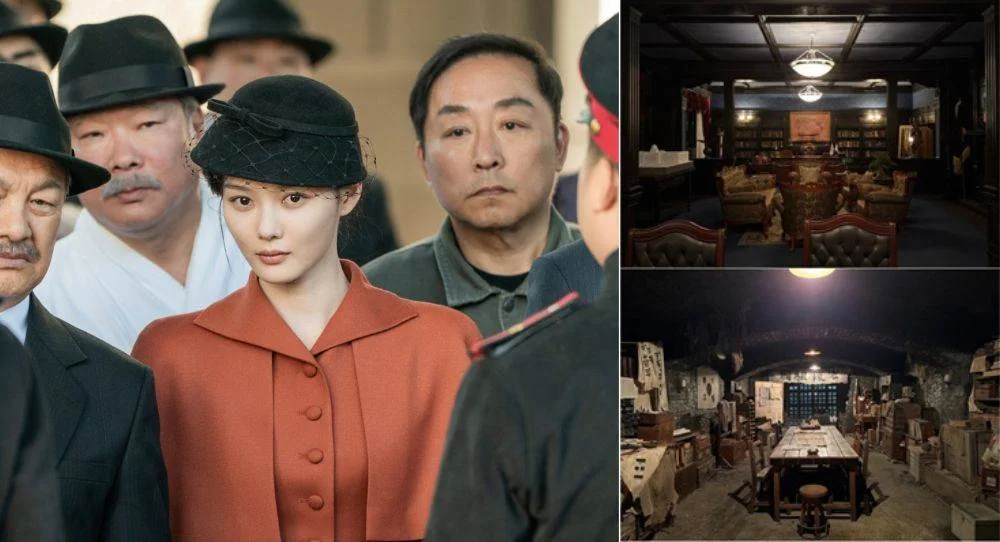
The production team behind tvN's hit drama 100 Days of Deception has revealed how historical research, including Japanese colonial-era propaganda footage, helped bring the streets and buildings of 1932 Gyeongseong to life.
On November 4, the drama's production team shared behind-the-scenes details from art director Yang Hong Sam, who explained the extensive research required to recreate Korea during the Japanese colonial period.
According to Yang Hong Sam, one of the biggest challenges was making the historical setting feel realistic to modern audiences without presenting the period as simply beautiful or romantic.
"The most important question was how to bring 1932 Gyeongseong to life in a vivid and convincing way for people living today," he explained.
The production team approached the setting with a clear idea: although 1932 is part of history for today's viewers, it was everyday life for the people who experienced it.
Rather than focusing only on historical buildings and fashion, the team wanted to show how ordinary people lived, worked, and struggled under Japanese colonial rule.
To achieve this, the art department studied old photographs, architectural records, street signs, furniture, and everyday household items.
When historical materials were unavailable, the team also researched buildings and living conditions in Japan, the United States, and other countries during the same period to help reconstruct missing details.
One of the most surprising discoveries came from Japanese colonial-era propaganda films.
Yang Hong Sam revealed that footage originally produced to justify Japan's colonial rule helped the team identify evidence of exploitation and understand how Koreans lived at the time.
"Ironically, we were able to find evidence of exploitation and details of everyday life through propaganda footage created by imperial Japan to justify its takeover of Korea," he shared.
The research also influenced the design of several major locations featured in the drama.
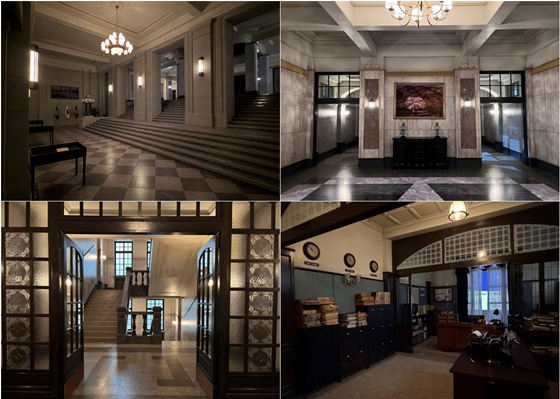
The Japanese Government-General of Korea building, located in front of Gyeongbokgung Palace during the colonial period, was designed to emphasize the intimidating nature of colonial authority.
The team used cold marble floors, tall columns, and large staircases to create an atmosphere of power and oppression.
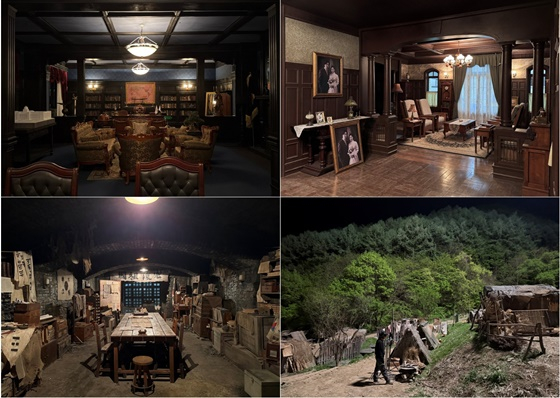
Meanwhile, the residence known as Heewon was inspired by Dilkusha, a historic Western-style house in Seoul. Its brick structure and Gothic-inspired design were recreated to reflect the architectural influences of the period.
https://www.instagram.com/tvn_drama/reel/DdkTvWjlpmH/
The production team also paid close attention to locations associated with ordinary Koreans, including poor neighborhoods and the secret meeting place of an independence group.
These spaces were designed to show not only the hardships people faced but also their determination to survive and protect one another.
Director Yoo In Sik praised the production team for its dedication, revealing that staff traveled across the country looking for suitable locations and even built sets for scenes that appeared on screen for only a few seconds.
Yang Hong Sam emphasized that the goal was not to romanticize Gyeongseong but to portray the different experiences of people living under colonial rule.
"Some people protected their beliefs for independence, while others struggled simply to survive each day," he explained.
He added that he hoped viewers would understand and connect with the lives and determination of those who lived through that difficult period.
The detailed historical production comes as 100 Days of Deception continues to enjoy strong ratings and popularity.
According to Nielsen Korea, the drama's eighth episode, aired on November 1, recorded an average rating of 10.7% and a peak of 11.6% in the Seoul metropolitan area, setting a new personal best and ranking first among all channels, including terrestrial broadcasters, in its time slot.
The series also topped Good Data Corporation's FUNdex TV-OTT drama buzz rankings for two consecutive weeks, while cast members Park Jin Young and Kim Yoo Jung ranked No. 1 and No. 2, respectively, in the actor buzz rankings for the fifth week of October.
With its attention to historical details and growing popularity, 100 Days of Deception continues to attract viewers not only through its story but also through its carefully recreated portrayal of Korea in 1932.